Do I really need a retaining wall, or can I just regrade?
This is probably the first thing folks ask me, and it's a good question. Sometimes, a simple regrade is all you need to fix a drainage issue or level out a small area. But if you've got a significant slope – I'm talking more than a 2:1 ratio (that's two feet horizontally for every one foot vertically) – or if you're trying to create usable, flat space on a hill, then a retaining wall is usually the way to go. Regrading a steep slope often just moves the problem around or creates an unstable situation that'll erode over time, especially with our Worcester winters and spring thaws. A well-built concrete retaining wall holds that earth back permanently and safely.
What kind of concrete retaining wall options are there?
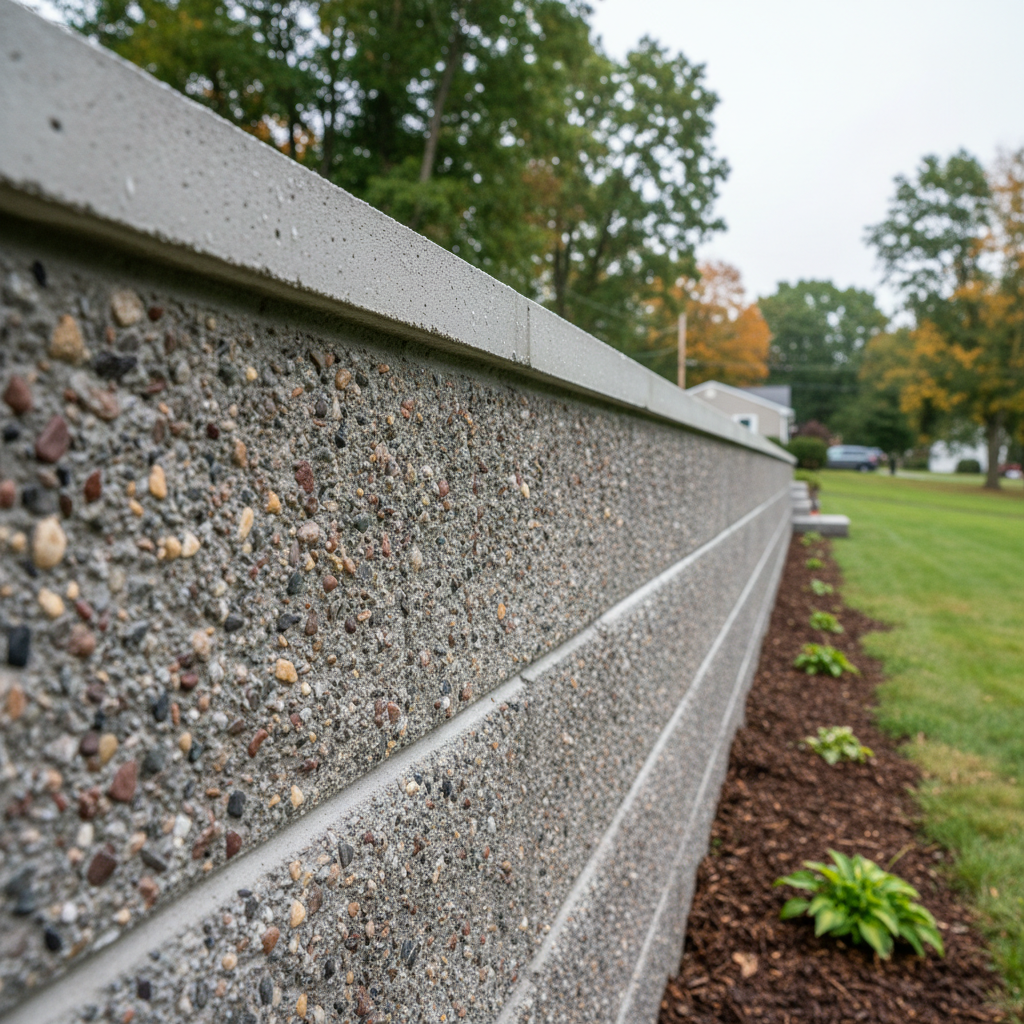
When most people hear "concrete retaining wall," they picture those big, gray, blocky things. And yeah, segmental retaining wall (SRW) blocks are super popular for a reason – they're strong, durable, and come in a ton of styles, colors, and textures now. You can get them to look like natural stone, old brick, or even modern, sleek designs. Another option is poured concrete, which is incredibly strong and can be formed into almost any shape. It's often used for really high walls or commercial jobs, but we do plenty of residential poured walls too, especially when folks want a very specific, custom look or need maximum strength. We can even stamp and color poured concrete to mimic other materials. Then there are precast concrete blocks, which are massive and often used for heavy-duty applications, but less common for typical residential landscaping unless you're dealing with a serious load.
How much does a concrete retaining wall cost in Worcester?
Alright, let's talk brass tacks. This is the big one, right? The cost of a concrete retaining wall isn't a one-size-fits-all answer. It depends on a bunch of factors: the height and length of the wall, the type of material you choose (SRW blocks vs. poured concrete, and then the specific block style), the site access (can we easily get equipment in there, or is it a tight spot?), the soil conditions (some soil needs more prep work or a deeper foundation), and any drainage requirements. Generally, you're looking at anywhere from $40 to $100+ per square foot of wall face. A simple, lower SRW wall might be on the lower end, while a complex, tall, poured concrete wall with special finishes will be on the higher end. We always give a detailed, transparent quote after seeing the site. Don't cheap out on this; a poorly built wall will cost you more in the long run.
What about drainage? Is it really that important?
Absolutely, 100%, yes. Drainage is critical – it's probably the most important factor in a retaining wall's longevity. Without proper drainage, water builds up behind the wall. Think about it: a cubic foot of water weighs over 60 pounds. If you've got hundreds of cubic feet of saturated soil behind your wall, that's an enormous amount of pressure. It can cause the wall to bow, crack, or even fail completely. We always install a perforated drain pipe (often called a French drain) behind the wall, surrounded by gravel, and then backfill with permeable material. This lets water escape safely. We also make sure the ground in front of the wall slopes away to prevent water from pooling at the base. Living here in Worcester, with our freeze-thaw cycles, proper drainage isn't just important, it's non-negotiable.
Do I need a permit for a retaining wall in Worcester?
Most likely, yes. In Worcester, any retaining wall over four feet in height generally requires a building permit. Even if it's under four feet, if it's supporting a significant load or is close to a property line or structure, it's always a good idea to check with the city's Inspectional Services Department. Don't try to skip this step. Permits ensure that the wall is designed and built to code, which means it's safe and won't cause problems down the road. It also means your property records are accurate, which is important if you ever sell. We can help you understand the permit process and often handle the necessary drawings and applications as part of our service at Concrete Evolutions Co.
How long do concrete retaining walls last, and what kind of maintenance do they need?
A properly designed and installed concrete retaining wall, whether it's segmental block or poured, is built to last a very long time – we're talking 50 to 100 years or more. They're incredibly durable. As for maintenance, that's one of the big advantages of concrete: it's pretty low-maintenance. You'll want to keep an eye on the drainage system to make sure it's not clogged – clear any leaves or debris from the outlets. Check for any signs of erosion at the base or top of the wall. If you notice any significant cracking, bowing, or shifting, that's when you should give us a call. Otherwise, it's mostly about keeping the area around it tidy. You might need to clean the surface occasionally if you get moss or mildew, but that's about it. They're built tough to handle the elements, even those crazy blizzards and torrential downpours we get around here.
Can I build a retaining wall myself to save money?
Look, I get it. Everyone wants to save a buck, and there are plenty of DIY videos out there. For a small, decorative garden wall, maybe a foot or two high, you might be able to tackle it yourself if you're handy. But for anything that's actually holding back a significant amount of earth, especially if it's over three feet tall, I strongly advise against it. Retaining walls aren't just a stack of blocks; they're engineered structures. There's a lot of science behind proper base preparation, compaction, drainage, and structural integrity. A DIY wall that fails can be incredibly dangerous, causing property damage, injury, or worse. It's also a huge headache to fix once it's gone wrong. You'll end up spending more to have a professional like Concrete Evolutions Co. come in and tear out the failed wall and build a new one correctly. It's one of those jobs where investing in professional expertise upfront pays off big time in peace of mind and longevity.