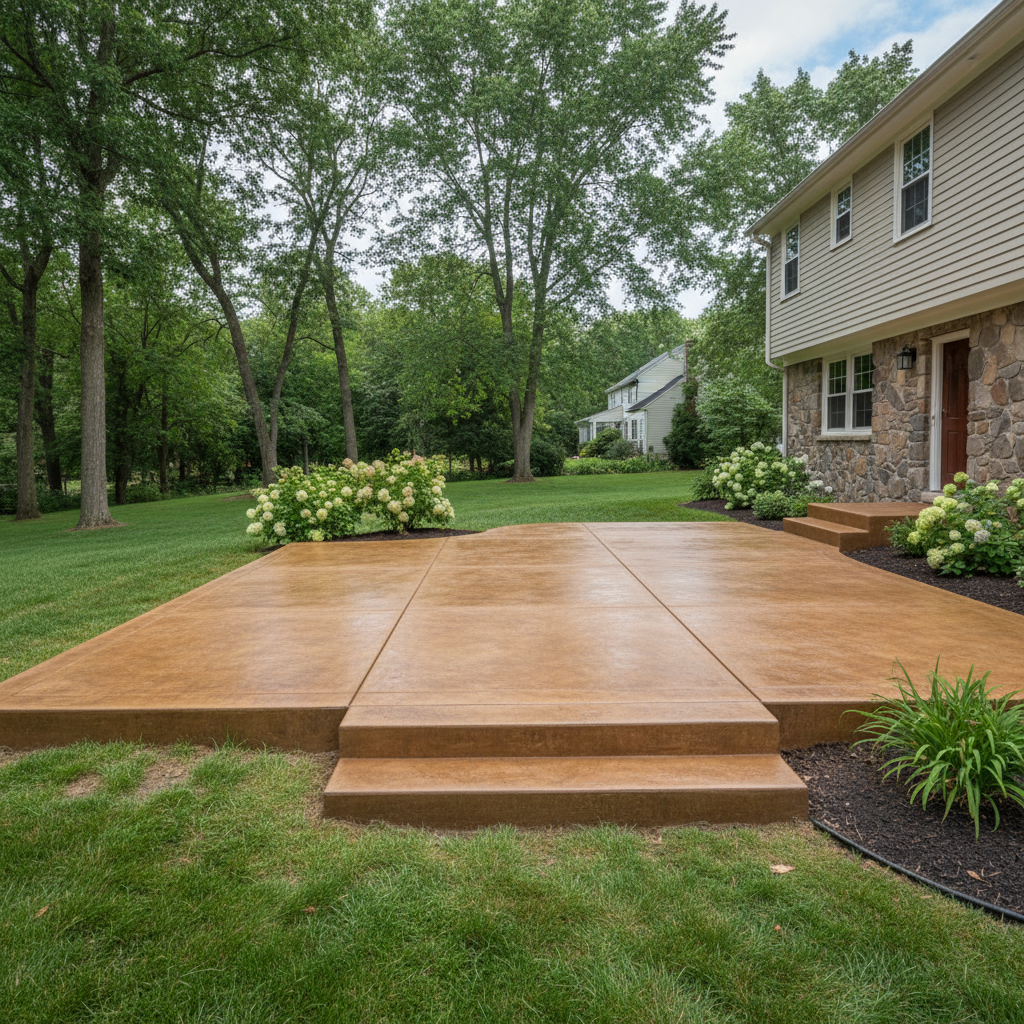
You invested in stained concrete, whether it's a patio, a basement floor, or that cool walkway leading up to your front door. It looks fantastic, right? And you want to keep it that way for years to come. That's smart. Here in Worcester, our weather can be pretty brutal on just about anything outdoors, and even indoor concrete needs a little love to stay vibrant.
Extending the Life of Your Stained Concrete
The biggest thing you can do to make your stained concrete last is to protect it from the get-go. We always apply a high-quality sealer after staining, and that's your first line of defense. Think of it like sunscreen for your concrete. But sealers don't last forever, especially outdoors.
For exterior stained concrete – patios, walkways, pool decks – you're battling UV rays, rain, snow, ice, and all the salt and chemicals we use to melt it. I generally recommend resealing exterior surfaces every 2-3 years. If it's a high-traffic area or gets a lot of direct sun, you might even consider doing it every year. For interior stained floors, the sealer holds up much longer. You're usually looking at 5-10 years, depending on foot traffic. A good sign it's time to reseal is when water doesn't bead up on the surface anymore, or the color starts to look a little dull.
Another big one, especially for exterior work, is drainage. Make sure water isn't pooling on your stained surface. If it sits there, it'll eventually find a way to compromise the sealer and the stain. Good grading around your patio or walkway is crucial.
Regular Maintenance: It's Easier Than You Think
Keeping your stained concrete clean is probably the simplest and most effective thing you can do. For interior floors, a regular sweep and damp mop with a pH-neutral cleaner is all you need. Stay away from harsh chemicals, ammonia, or anything abrasive – they'll strip your sealer faster than you can say 'Concrete Evolutions Co.'
For exterior surfaces, a good rinse with a garden hose and a soft-bristle brush is usually enough to get rid of dirt and grime. If you've got stubborn spots, a mild detergent and water will do the trick. Just make sure to rinse it thoroughly. Pressure washers can be used, but you've got to be careful. Too much pressure, or holding the nozzle too close, can damage the sealer and even etch the concrete itself. Keep the pressure low and the nozzle moving.
Don't let leaves, dirt, or other debris sit on your exterior stained concrete for long periods, especially during our wet fall and spring. They can trap moisture and cause discoloration or even mildew growth.
Warning Signs of Trouble
You'll know when your stained concrete needs attention. Here are a few things to keep an eye out for:
- Fading or dullness: This is usually the first sign that your sealer is wearing thin, especially in areas that get a lot of sun or foot traffic. The color just doesn't pop like it used to.
- Peeling or flaking sealer: If you see the top layer of sealer actually lifting or coming off, that's a clear indicator it's failed. This often happens in areas exposed to freeze-thaw cycles, which we get plenty of here in Worcester.
- Stains that won't come out: If spills are soaking in and leaving a mark, your sealer isn't doing its job anymore. A properly sealed surface should repel most liquids.
- White spots or haziness: Sometimes this can be efflorescence, which is mineral salts coming up through the concrete. It can also be a sign of moisture issues or a sealer problem.
- Cracks: While concrete can crack, if new cracks are appearing or existing ones are widening, it could indicate a deeper structural issue, not just a surface problem.
When to Call a Professional
Look, a lot of the basic maintenance you can handle yourself. But there are times when it's best to call in someone who knows what they're doing. If you're seeing extensive peeling, significant fading, or deep stains that you can't get out, you might need a professional to strip the old sealer and reapply a new one. This isn't a DIY job if you want it done right.
If you've got cracks that are more than hairline, or if you're unsure about the cause of a problem, give us a call. We can assess the situation, figure out what's going on, and recommend the best course of action. Sometimes it's a simple fix, other times it might require a bit more work. But getting it addressed early can save you a lot of headache and money down the road. We've seen it all, from the old triple-decker basements in Main South to the newer construction out in Tatnuck, and we know how Worcester's climate impacts concrete. Don't let a small issue turn into a big one.