What's the difference between concrete and cement?
This is probably the most common question I get, and it's a good one, too, because people use those terms interchangeably all the time. But they're definitely not the same thing. Think of it like this: cement is an ingredient, and concrete is the finished product. Cement is a powdery binder – usually Portland cement – that, when you mix it with water, sand, and gravel (we call these "aggregates"), kicks off a chemical reaction. That reaction is what makes concrete harden and get strong. So, you don't pour a cement driveway; you pour a concrete driveway. Cement's just one part of the recipe, you know?
How long does concrete flatwork actually last around here?
Look, a properly installed concrete driveway, patio, or sidewalk right here in Worcester should last you a good 20 to 30 years, easy. Some folks even get more time out of it! But that's only with proper installation and a little bit of care. What really kills concrete around here? Our winters are brutal. Those freeze-thaw cycles are the biggest enemy. Water gets into tiny cracks, freezes, expands, and makes those cracks bigger. That's why good drainage, a proper mix design for our climate, and sealing are so important. If you've got a contractor who's cutting corners, you'll see spalling and cracking a lot faster, sometimes in just a few years. It's not the concrete's fault then; it's the installation.
Do I really need to seal my concrete, and if so, how often?
Absolutely, you need to seal it, especially for anything outdoors here in New England. Think of sealer as sunscreen for your concrete, but also a raincoat. It protects against moisture penetration, which, as I just mentioned, is critical for fighting off freeze-thaw damage. It also helps against stains from oil, de-icing salts, and general wear and tear. For driveways and high-traffic areas, I usually recommend sealing every 2-3 years. If you've got a patio that sees less abuse, maybe every 3-5 years. It's an easy DIY job if you're up for it, or we can handle it for you. Honestly, it's a small investment that pays off big time in extending the life of your flatwork.
What causes those cracks I see in concrete, and are they always a problem?
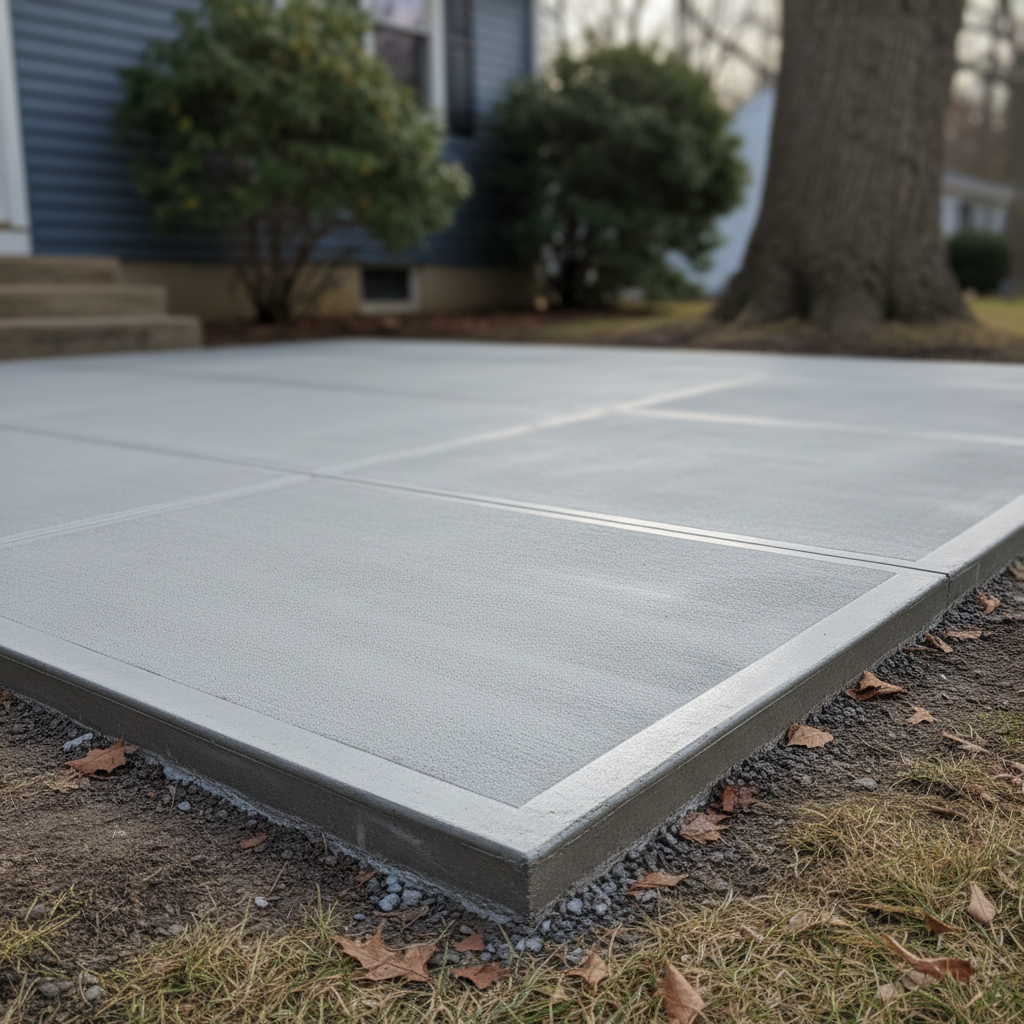
Cracks are almost inevitable with concrete, unfortunately. It's just a natural characteristic of the material. Concrete shrinks as it cures, and that shrinkage creates internal stresses. That's why we put in control joints – those lines you see cut into fresh concrete. They're designed to give the concrete a place to crack in a controlled, less noticeable way. Not all cracks are a big deal. Hairline cracks, especially if they follow a control joint, are usually just cosmetic. But if you see wide cracks (say, wider than a credit card), cracks that are uneven (one side higher than the other), or cracks that are spreading rapidly, those can indicate a more serious issue like sub-base failure or significant settling. That's when you should definitely give Concrete Evolutions Co. a call to get it checked out.
Can you pour concrete directly over my old asphalt driveway?
Short answer: no, not usually. It's a common question because people want to save on demolition. But pouring concrete directly over asphalt is generally a bad idea. Asphalt isn't a stable, rigid base. It moves, it cracks, it degrades. If you pour concrete on top of an unstable base, that movement and instability will transfer right up to your new concrete, leading to premature cracking and failure. You need a solid, well-compacted sub-base for concrete to perform as it should. That means removing the old asphalt, preparing the ground properly, and then pouring the concrete. It's more work upfront, but it saves you a headache and a lot more money down the road.
How long before I can drive on my new concrete driveway?
Patience is key here! I know you're excited to use your new driveway. For foot traffic, you can usually walk on it safely after about 24-48 hours, depending on the weather. But for vehicle traffic, you need to wait longer. I always tell folks to wait at least 7 days, and ideally 28 days, before driving heavy vehicles on it. Concrete gains most of its strength in the first week, but it continues to cure and harden for about a month. Driving on it too soon can cause permanent damage, like tire marks, surface imperfections, or even structural cracks, especially if you're turning your wheels sharply. It's like letting a cake cool before you cut it – it needs time to set up properly.
What's the deal with rebar and wire mesh in concrete? Are they always necessary?
Rebar (reinforcing bar) and wire mesh are both types of steel reinforcement we use in concrete. They serve a similar purpose: to add tensile strength. Concrete is super strong under compression (when you push on it), but it's pretty weak when it's pulled apart (tension). That's where steel comes in. It helps hold the concrete together, especially when it cracks, preventing those cracks from widening and becoming structural problems. For most driveways, patios, and sidewalks around here, especially with our clay soils in areas like Tatnuck, I almost always recommend using some form of reinforcement. Wire mesh is common for slabs, while rebar is used for thicker sections or where more structural integrity is needed. It's an extra cost, sure, but it significantly improves the longevity and durability of your flatwork, making it much more resistant to our ground movement and freeze-thaw cycles.