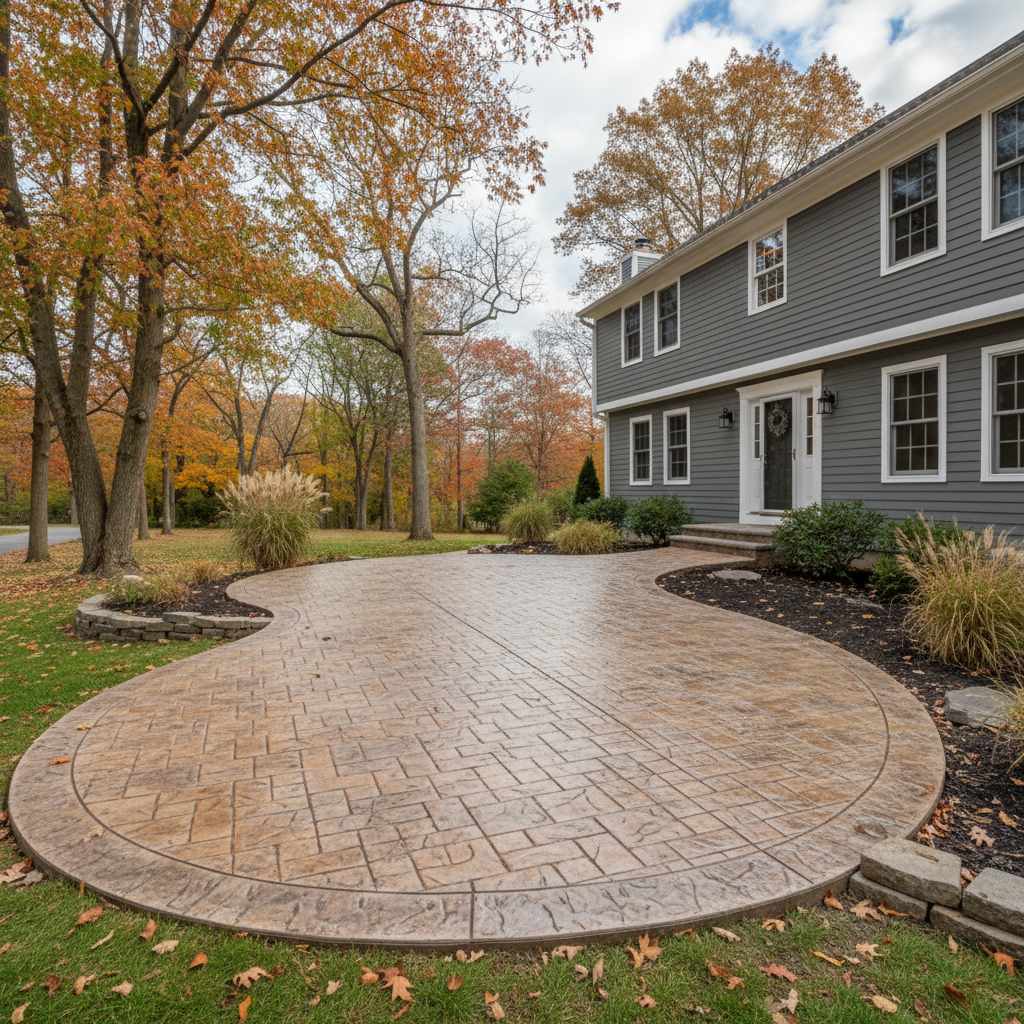
If you live in Worcester, you know our weather is not exactly mild. We get all four seasons here. These seasons can be pretty extreme. That is why timing is important when it comes to concrete work around your home. It is a key factor for how long your new driveway, patio, or walkway will actually last. You want a concrete job that stands up to our tough winters as well as our hot, humid summers. So, we will talk about when to get that work done. We will also talk about how to keep it solid once it is in.
When is the Best Time to Pour Concrete in Worcester?
The best time for pouring concrete is when temperatures are moderate. This is typically between 40°F and 70°F. This temperature range allows the concrete to cure properly. It gains strength without drying too fast. It also keeps it from freezing.
Spring: A Solid Start (with a Catch)
Spring is a popular time for concrete work in Worcester. The ground has thawed by then. Temperatures are usually mild. This gives your concrete plenty of time to cure before the summer heat really starts. But there is a catch with spring weather in Worcester. It can be unpredictable. We get those sudden downpours. Too much rain can delay scheduling for your Concrete Evolutions Co. project. It can even cause problems for fresh concrete if it happens too soon after a pour. Our team is always watching the forecast closely for you.
Fall: Often the Ideal Window
Many pros, including us at Concrete Evolutions Co., think fall is the best time for concrete work around here. Temperatures are generally stable in the fall. They are cool but not cold. Humidity tends to be lower. There is less risk of extreme heat causing problems with the concrete curing process. Those cooler nights actually help slow down the curing. This leads to stronger, more durable concrete. In addition, it gives the concrete plenty of time to strengthen up before winter's freeze-thaw cycles hit Worcester.
Summer: Proceed with Caution
Summer can work for Concrete Evolutions Co. projects. However, it is trickier. High temperatures make concrete set faster. This sounds good. But it can lead to rapid drying. It can also cause shrinkage cracks as well as a weaker finish. We would need to take extra precautions during summer pours in Worcester. This includes using cooler water in the mix. We also use special admixtures. Our team shades the slab to keep it from drying out too fast. Sometimes, we will schedule pours for earlier in the morning. We also schedule them for later in the evening. This helps us avoid the hottest part of the day.
Winter: Generally Best to Avoid
Winter is the toughest time for new concrete installation in Worcester. Our winters are freezing as well as snowy. Average daily high temperatures are often below 43°F from December to March. If the temperature drops below freezing, water in the concrete mix can turn to ice. This ice expands. It can cause significant damage like cracks. It also causes reduced strength. It is not impossible to pour concrete in winter. We can use heated enclosures as well as ground warming as well as special additives. However, it adds a lot of complexity as well as cost. Unless it is an emergency repair, Concrete Evolutions Co. usually recommends waiting until spring for your concrete project.
Worcester's Climate and Your Concrete
Our city's unique climate means a few things are always on our minds when Concrete Evolutions Co. is working on your property:
- Freeze-Thaw Cycles: Worcester is at a higher elevation than much of eastern Massachusetts. This means we get more frequent as well as more intense freeze-thaw cycles. Water seeps into tiny pores in the concrete. It freezes. It expands by about 9%. Then it thaws. This repeated expansion as well as contraction is a major cause of cracks. It also causes chipping as well as surface damage (spalling) over time.
- Clay Soils: Many areas in Worcester have clay-heavy soils. This includes Tatnuck as well as Grafton Hill. Clay expands when wet. It contracts when dry. This puts stress on foundations as well as flatwork. Concrete Evolutions Co. always accounts for this with proper sub-base preparation. We often use a minimum of 6 inches of compacted gravel for driveways as well as patios. We also make sure there is adequate drainage.
- Frost Depth: Massachusetts requires footings to go below the frost line. In Worcester, this means a minimum of 48 inches. If footings are not deep enough, the freezing ground can push them upward. This causes cracks in whatever sits on top. This is why Concrete Evolutions Co. never cuts corners on depth for your Worcester concrete project.
Protecting Your Concrete Investment Year-Round
Once your concrete is in, you want it to last. Here is how to protect it through all our Worcester seasons:
- Proper Curing is Key: This part is on us during installation. Concrete Evolutions Co. uses methods like wet curing. We also apply a curing compound. This makes sure the concrete gains maximum strength. It also reduces permeability. This is important for its long-term resistance to our Worcester weather.
- Sealing: A good quality sealer is your concrete's best friend. This is especially true in New England. It creates a barrier against moisture. It also protects against de-icing salts as well as chemicals. This significantly reduces the impact of those freeze-thaw cycles. We recommend re-sealing every few years. This depends on traffic as well as exposure.
- Drainage, Drainage, Drainage: Make sure water drains away from your concrete surfaces. It should not drain towards them. This is especially important for properties on our city's many hills. Poor drainage means water can sit. It can also seep into the concrete. This speeds up damage.
- Avoid De-Icing Salts: De-icing salts are convenient. However, many of them can be harsh on concrete. This is especially true for newer concrete. They can increase the number of freeze-thaw cycles the concrete experiences. They can also cause surface damage. Use sand for traction. You can also choose concrete-safe de-icers.
- Clear Snow Promptly: Do not let heavy snow sit on your concrete for long periods. When it melts and refreezes, it adds to the freeze-thaw cycle.
Getting your concrete project done right in Worcester means understanding our local climate. It is not just about the pour. It is about planning. It is also about proper installation as well as year-round protection. If you are thinking about concrete work, give Concrete Evolutions Co. a call. We will help you schedule it for success. Our team will also make sure it is built to last.